



MARK WILKINSON
FROM SETBACKS TO STRENGTH: HOW SPORT HAS HELPED TWO STUDENTS THRIVE
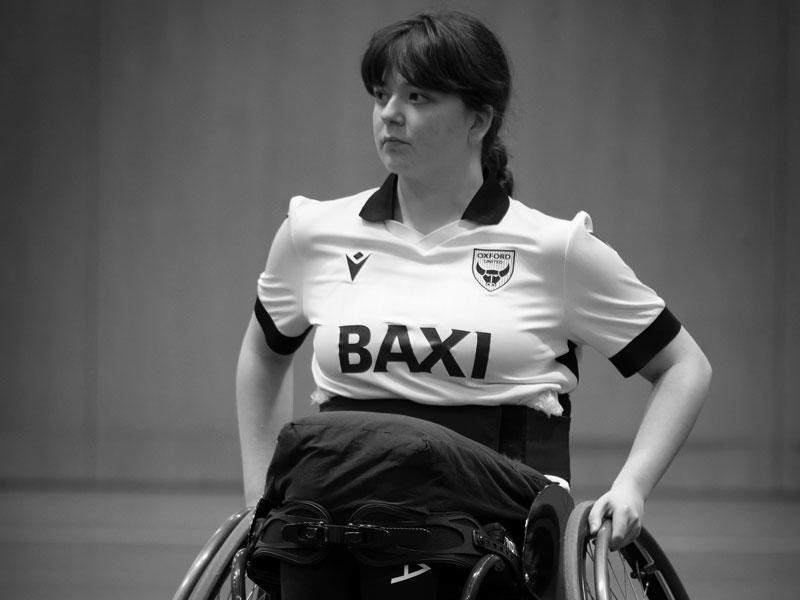
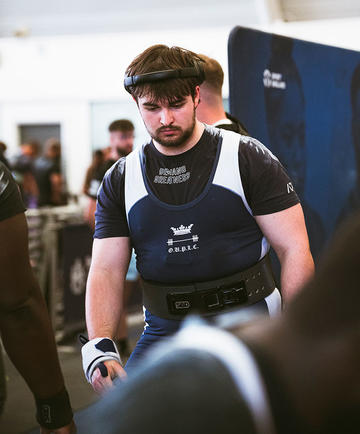
At the end of his first year at Oxford, Will James began suffering from chronic migraines, forcing him to take a year out from his Physics degree. It was on this break that he was introduced to powerlifting – a strength sport focused on maximising weight in three specific disciplines: squat, bench press and deadlift.
Powerlifting has grown rapidly in recent years, fuelled in part by social media and online content helping to spread awareness and draw in new fans and lifters. Will was hooked, and by the time he was back in Oxford had resolved to join the Oxford University Powerlifting Club (OUPLC).
‘It was quite difficult coming back from a year out,’ he says. Many of the friends he had made were approaching finals and preparing to graduate, but the club gave him an immediate sense of belonging. ‘It was nice having a really welcoming, extraordinarily lovely community – just the most wonderful people. And it all just went from there.’
For Linnet Drury, who had acquired a disability shortly before coming to Oxford to study Mathematics and Philosophy, joining the Oxford Kites Wheelchair Basketball Club (part of the Oxford University Basketball Club) also provided a lifeline. ‘Trying to do my first year of university with a disability felt like quite an isolating experience,’ she says, ‘so it was just game-changing being in an environment where there were other people who were going through the same kinds of things as me, but dealing with it in a positive way.’
Lowering the barriers to sport at Oxford

The Oxford Kites Wheelchair Basketball Club is the first dedicated adaptive sports team within the University, and its membership is a mix of wheelchair users, people with disabilities, people with injuries and able-bodied people. This instantly helps lower a barrier that Linnet says can be quite common in adaptive sport – people feeling that they may not be ‘disabled enough’ to take part. ‘At first I thought that maybe I wouldn’t be allowed to play, because even though I use a wheelchair I can walk short distances,’ she says. ‘But when I saw that able-bodied people could come as well, I knew I would be welcomed.’
The club also supports neurodivergent learning styles in its coaching, and the team is open to those of all genders and none. Members hail from the University, Oxford Brookes and the wider Oxfordshire community, making it one of the most accessible sport offerings in the area. Crucially, it also gives people the chance to try out equipment that that might otherwise be out of reach: ‘I think if you were going to be buying your own basketball wheelchair you wouldn’t be able to get anything for under £3,000,’ says Linnet. The club currently has a fleet of 16 chairs in a range of shapes and sizes, allowing players to find a setup that suits their individual needs.
Will, who recently became Men’s Captain, says that OUPLC is also working hard to lower the barriers to entry for newcomers: ‘Because we have such a scope of lifters, including people lifting obscene weights, that can be quite intimidating. It is hard to get people to believe us when we say that we’re friendly – but we do a lot to help with that.’ Inquisitive students can join for a taster session, and this year the club is offering an expanded nine-week programme for new lifters, which works out around £2.50 a month – a fraction of the cost of private powerlifting coaching.
Competition and connection
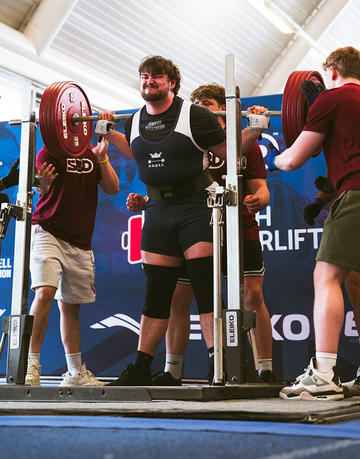
While many who join OUPLC simply enjoy training as part of a healthy lifestyle, those with competitive ambitions are also well supported. One highlight for Will has been participating in the British Universities and Colleges Sport (BUCS) Powerlifting Championships, where last year he set a bench press record for the club. Next up is Varsity on 6 February in Cambridge. ‘It’s a really nice balance between wanting to win and knowing that you just need to go and do the best you can. And ultimately, win or lose, hopefully you’ll have achieved something for yourself,’ he reflects.
Competition is also increasingly part of the picture for the Oxford Kites, which recently set up regular, friendly tournaments in Egham – giving many members their first ever chance to play competitive team sport. Last year, the club was also invited to play an exhibition match at the Oxford–Cambridge running basketball Varsity. With Cambridge yet to establish its own wheelchair basketball team, the fixture offered a valuable opportunity to raise awareness and reconnect with the wider basketball community.
Visibility and connection are key priorities for Linnet, now Assistant Coach at the club. There was an enormous growth in public interest and grassroots participation in adaptive sports after the London 2012 Paralympics, but the COVID-19 pandemic put an end to many of the community offerings that had grown out of that. Linnet’s hope is that the Oxford Kites can help rebuild momentum – serving both as a model for new accessible clubs and supporting existing ones to broaden their adaptive sport provision.
This aligns closely with the work already underway at Oxford University Sport, which has partnered with the Disability Advisory Service and the Student Union’s Disability Campaign to expand and develop accessible opportunities. All University sports clubs welcome accessibility enquiries from people with a disability, and many now offer additional provision, including para-archery, para-athletics, visually impaired ice hockey and adaptive and visually impaired judo.
For Linnet, increasing awareness of just how life changing adaptive sport can be is key to unlocking funding and encouraging others to invest the necessary time and energy. ‘It is a lot of effort,’ she says, ‘but if I think of the number of people whose lives have changed so much… Seeing people blossom within the club, become leaders and help new members – we want to spread the word about how worthwhile it is.’
‘It’s hard to sum up how much of an impact it’s had’

Linnet sees this transformation in herself too. When she first began playing wheelchair basketball, she didn’t have the strength to throw the ball high enough to reach the net (the club uses the same hoop height as running basketball teams) – now she’s scoring competitive baskets. And the improvement in her physical strength means that that its easier for her to attend lectures in person, rather than watching them online. Linnet also credits her role in the club with inspiring her move into student activism, recently concluding her term as Chair of the Student Union’s Disability Campaign. ‘It’s hard to sum up quite how much of an impact it’s had on my student experience,’ she says.
Powerlifting has had a profound impact on Will’s time at Oxford too. ‘It’s wonderful to have this space where, when you need, there is the community support,’ he says, crediting the club with helping him navigate difficult periods. At the same time, he values the independence powerlifting offers. ‘It’s a really powerful tool because you don’t need people around you, it’s incredibly under your control in a way that very few sports are.’
Powerlifting has also taught him skills and values that extend beyond the gym, he says. Chief among them are self-awareness and respect. ‘It’s not easy to understand how hard you’re working without really listening to your body. If you make decisions guided by ego, you tend to make very little progress and get injured – so having respect for yourself and being able to make the right choices is very important.’
A bright future
For Will, whose sights are now turning to securing a national singlet, his own journey continues to surprise him. ‘If you’d asked me in my first year, I wouldn’t have imagined that I’d be dreaming about representing my country for anything,’ he reflects. He’s now approaching the end of his time as a student but is confident that he’ll remain involved with the sport. ‘Where I’m going to be working next year is right next to a very good powerlifting gym,’ he laughs. ‘It’s going to be calling me.’
For Linnet, the focus is on what comes next for the Oxford Kites. The club is at an exciting crossroads: balancing its open, grassroots ethos with growing ambitions to support those who would like to complete at a higher level. There is time to find that balance – and, as Linnet points out, one of the joys of a community sports club is that graduation doesn’t have to mean goodbye.
move to carousel movement controls
 Pause slideshow
move to carousel content
Pause slideshow
move to carousel content

OFF THE SHELF: MARCH 2026
OFF THE SHELF: MARCH 2026

HEDGELAYING AT HARCOURT ARBORETUM
HEDGELAYING AT HARCOURT ARBORETUM

THROWING DOWN THE CLIMATE GAUNTLET
THROWING DOWN THE CLIMATE GAUNTLET

CHANCELLOR CONFERS SPECIAL HONORARY DEGREES
CHANCELLOR CONFERS SPECIAL HONORARY DEGREES
EVERYDAY BEETHOVEN
EVERYDAY BEETHOVEN

OXFORD ALUMNI RECOGNISED IN NEW YEAR HONOURS
OXFORD ALUMNI RECOGNISED IN NEW YEAR HONOURS

‘ARTISTS ARE THE GREAT CONVENORS’
‘ARTISTS ARE THE GREAT CONVENORS’

SPACE FOR READING
SPACE FOR READING

OFF THE SHELF: FEBRUARY 2026
OFF THE SHELF: FEBRUARY 2026

ON PUMAS AND PENGUINS
ON PUMAS AND PENGUINS

ACTIVISM DISCUSSED AT THE SHELDONIAN
ACTIVISM DISCUSSED AT THE SHELDONIAN
Pause slideshow

